

Hearing protection is a vital control measure in noisy workplaces, but over-protection is an often-overlooked risk in hearing safety. Using hearing protection that blocks too much sound can be just as problematic as not providing enough protection at all.
Over-protection occurs when hearing protectors reduce noise levels at the ear to below 70dB (or thereabouts), which is considered excessive under standards such as BS EN 458. While maxing out on higher levels of noise attenuation might sound safer, in practice it can increase risks of harm and it can actually be counterproductive and dangerous. Safety risks are particularly acute in environments where workers need to hear warnings, alarms, vehicles or colleagues.
What is over-protection?
Over-protection usually results from selecting earplugs or earmuffs with a Single Number Rating (SNR) that is higher than required for the actual workplace noise level. This can leave employees isolated from their surroundings, which can reduce situational awareness and increase risk of accidents, even though the intention was to keep them safe.
Why is over-protection a problem?
The risks of over-protection are significant and wide-ranging:
- Communication difficulties: Muffled speech can make it hard for workers to understand instructions or communicate clearly, leading to errors and frustration.
- Missed warning signals: If alarms, sirens, or approaching vehicles cannot be heard, the risk of accidents increases substantially.
- Increased risk of removal: Workers often remove or loosen hearing protection to hear better. This can become a habit, exposing them to hazardous noise and increasing the risk of noise-induced hearing loss.
- Isolation and stress: Feeling cut off from the working environment can cause stress, disengagement, and reduced situational awareness.
- Wasted investment: Employers may spend money on high-SNR hearing protection that is not worn correctly or consistently, undermining both safety and value.
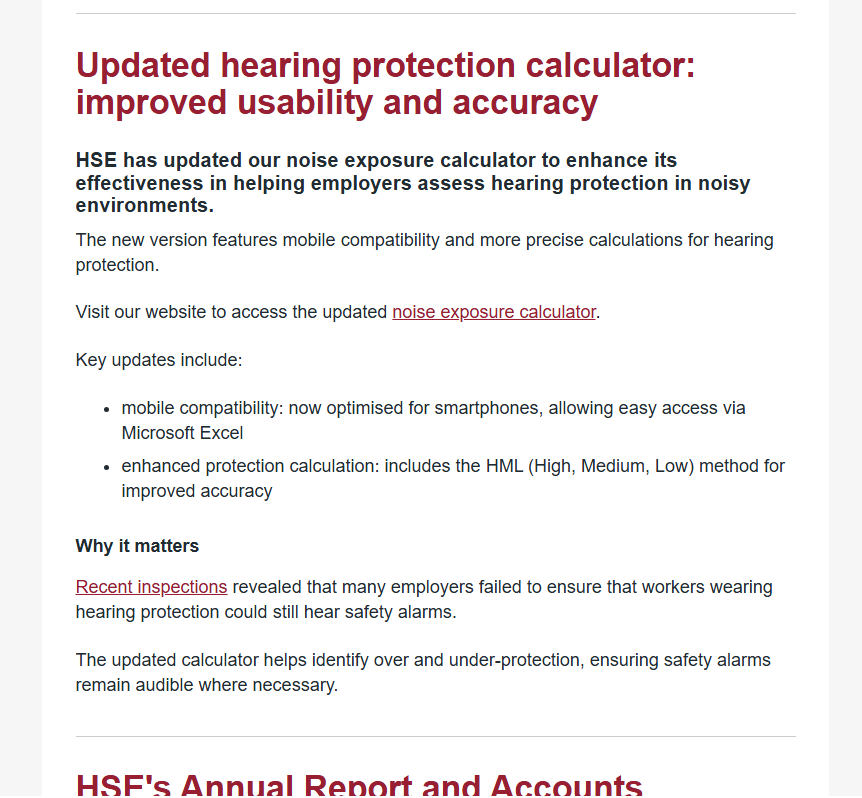
Recent HSE inspections have highlighted this issue, finding that many employers failed to ensure workers wearing hearing protection could still hear safety alarms. This demonstrates that providing protection alone is not enough — it must be appropriate.
The goal: balanced protection
Effective hearing protection should strike a balance between reducing harmful noise and maintaining awareness. The aim is typically to reduce noise exposure to around 75dB at the ear, not as low as possible.
Achieving this requires:
- The right rating: Selecting hearing protection suitable for the specific noise environment, rather than defaulting to the highest SNR available.
- The right fit and training: Hearing protection is useless if not used correctly. Users should be shown how to store and wear their protection correctly, as well as the risks from poor practice.
- Maintained awareness: Ensuring workers can still hear important sounds, warnings, and speech.
- Proper assessment: A robust noise risk assessment to avoid both under-protection (risking hearing damage) and over-protection (creating safety hazards).
To support this, the HSE has updated its noise exposure and hearing protection calculator, improving usability and accuracy. The updated tool is mobile-compatible and now includes the HML (High, Medium, Low) method, making it easier to identify both over- and under-protection and ensure safety alarms remain audible where required.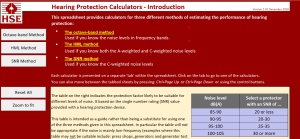
The key message is simple: hearing protection should be suitable, not excessive. Balanced protection keeps workers safe from noise-induced hearing loss while ensuring they remain alert, connected, and safe in their working environment.
At Health Wizard at Work, as part of our training for clients, we always emphasise the requirement for audibility assessments and effective training for staff. Following a presentation at the UKHCA Conference by Chris Steel, we ensure the updated HSE hearing protection calculator is highlighted, as it is one of the most effective ways to demonstrate to the HSE that you are actively managing the risks of over-protection and maintaining control of noise exposure.
Contact us for a free demo here